Category Archives: Uncategorized

Barbara’s Memories

An interview with Barbara Kinnaird, member of staff at the Battle of Britain House

It’s a short drive to Wallis House, the retirement home where Barbara Kinnaird lives. At 98, she’s still a resident of Ruislip, a bright and pleasant lady who very kindly agreed to share her memories of working at the Battle of Britain House in the early 1960s – and who still does her own shopping in Ruislip High Street ! Barbara is quite possibly the last surviving member of staff at the mansion, and the stories and photos she shared open another window to the lost mansion’s nearly forgotten past.

Photos from the past

I met Barbara Kinnaird at Wallis’ House communal hall, and we dived right into looking at our photo collections. “I was the cook” , she relates, “and my husband Ian was the handyman and used to work in the garden. We both started in January 1961, and Ian eventually retired, then passed away on New Year’s Eve 1977 – I continued to work there until the mansion burned down in 1984. We lived in the cottages across the (Ducks Hill) road, and I would walk from there every morning”.
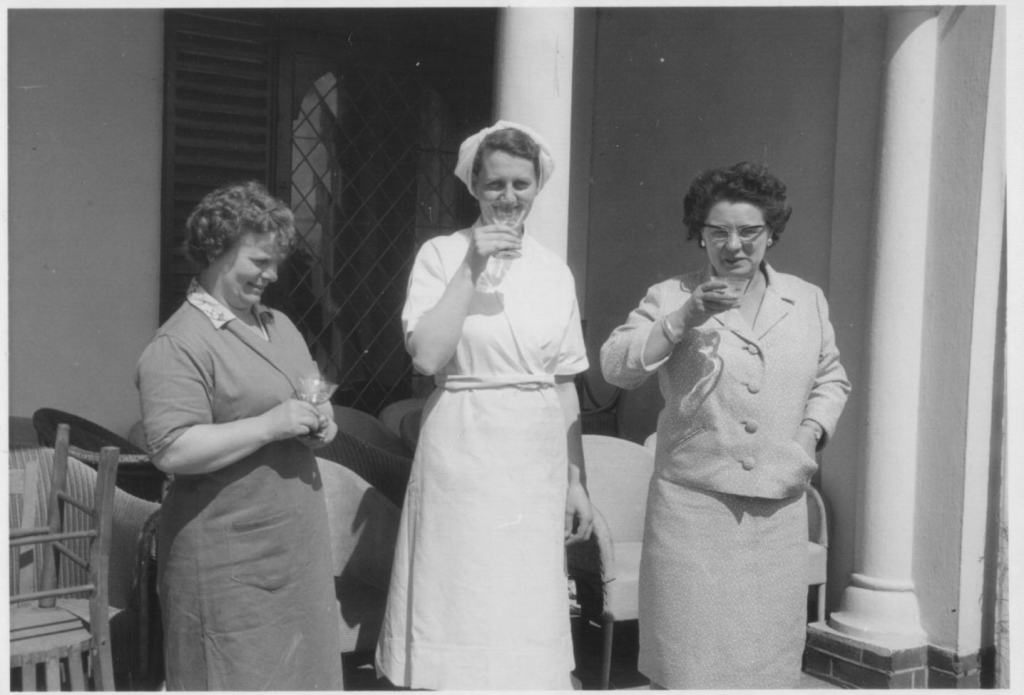
Millie (R), Barbara (M), and Gwen Stanyon (R) ca.1962

I show her this photo. “Oh yes, that’s me, with Millie and Mrs Stanyon. Yes, I got this photo too !
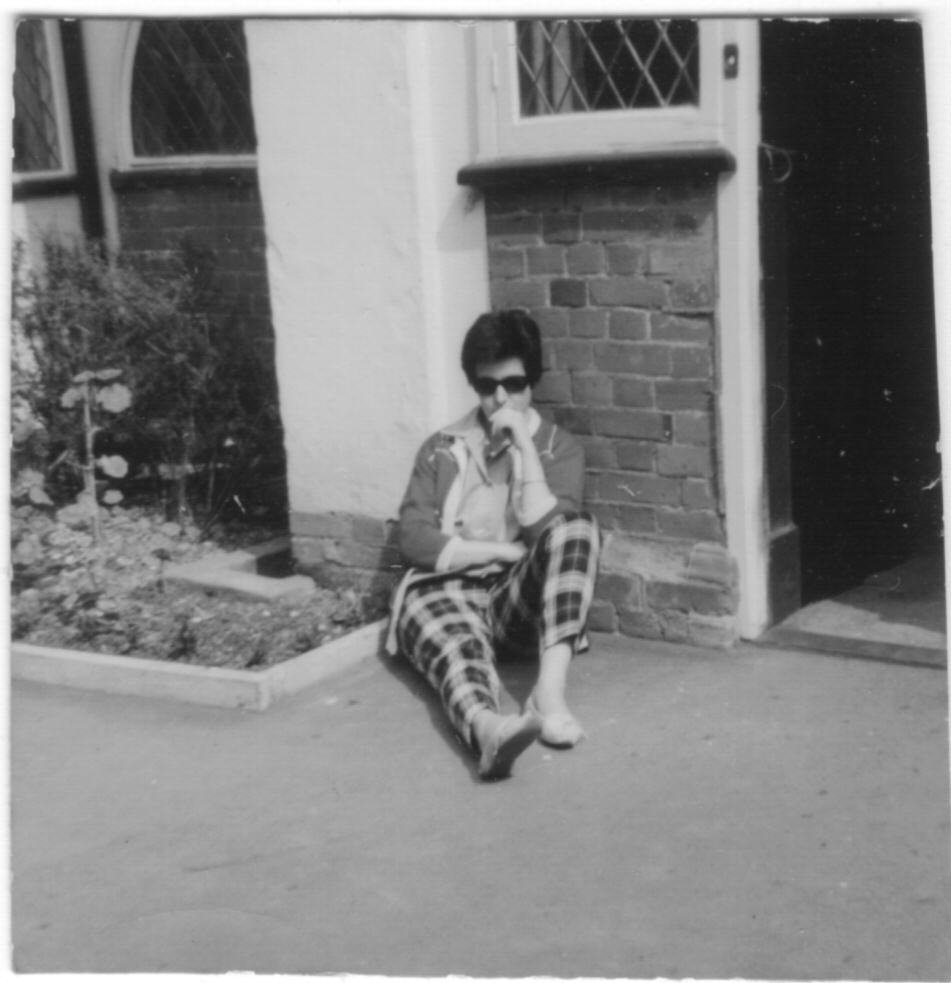
Maria-Louisa, the Portuguese au-pair

I ask her about the lady in this photo. “I think she was one of the various au-pair girls who helped – one of the Portuguese girls who met her future husband there – he was on a course at the Battle of Britain House. She met him there and they got married. I believe these photos are from when they got married, and we would be drinking to their health.” She’s Maria-Louisa”, I remind her. “Oh yes, that’s right. Marie-Louise (sic), she’s the one. She died a few years ago, I think. I don’t know about her husband – Seeger it was I think – I’ve forgotten the name.” Sid Owen – which I realize now might have been a pseudonym – is the fellow who sent me those invaluable photos, and probably the husband. I’m surprised he never mentioned he was actually married to Maria Louisa !
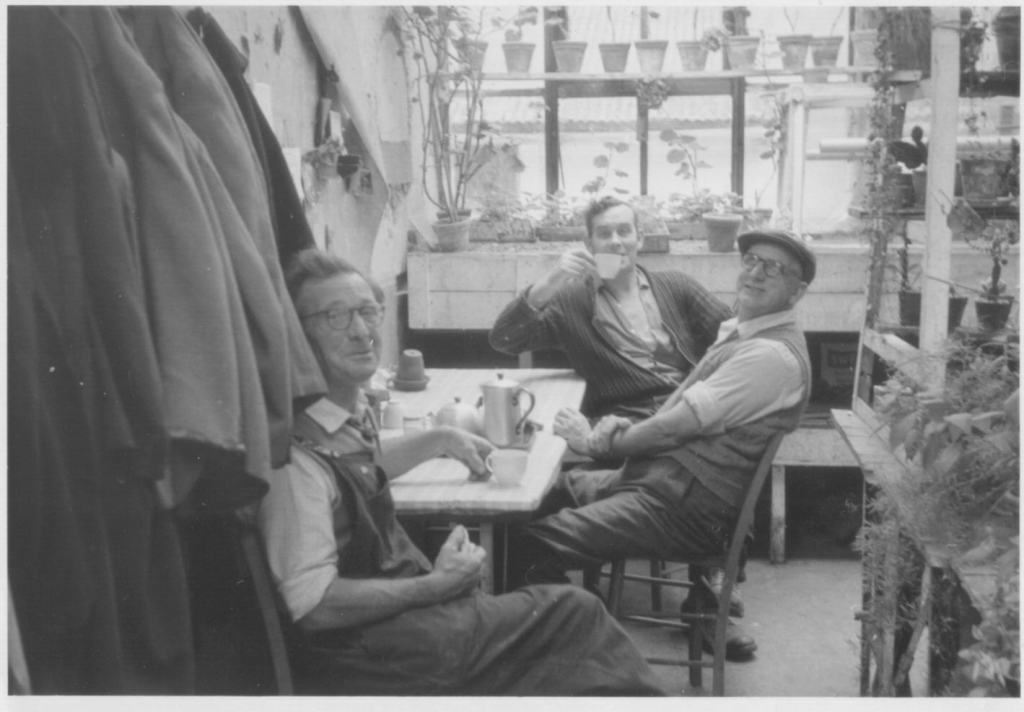
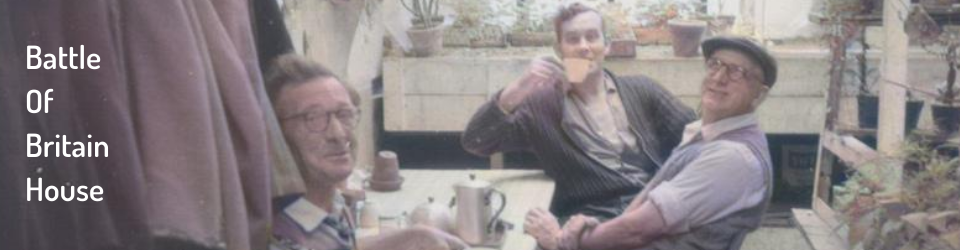
Ian Kinnaird (M), Len/Ken (R) and Harry (L)

I show her the next photo. “Oh yes that’s my husband, and Len, and Harry, I think he was, in the garden shed having their break !” she laughs. “Ian was the handyman. Ken (sic) was the head gardener, and the others helped.
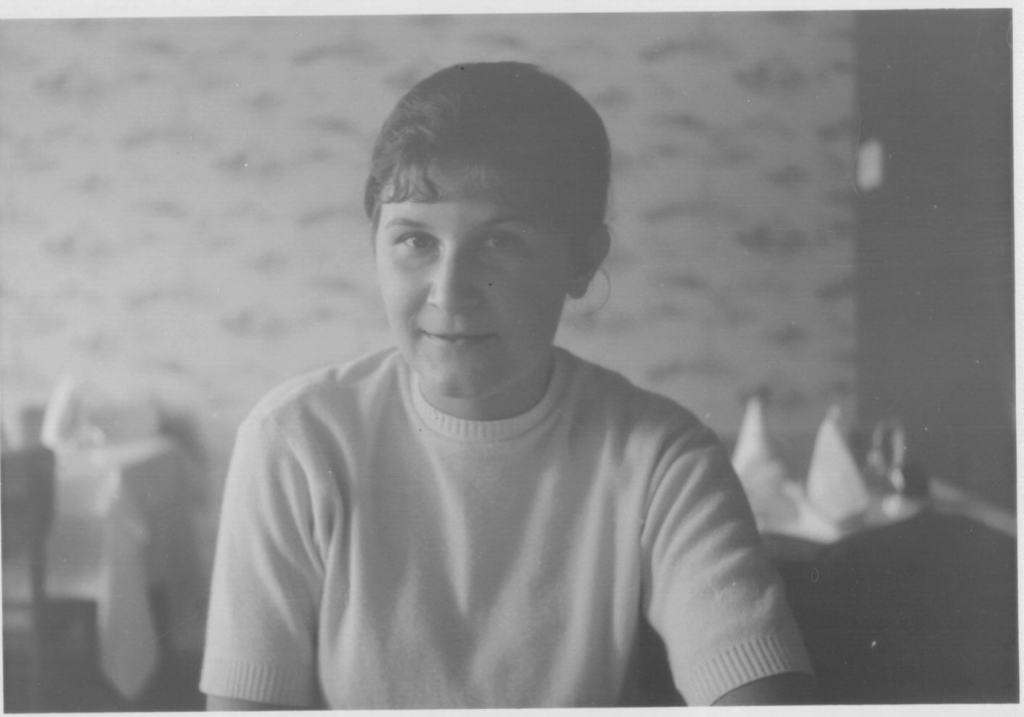
Karen, an au-pair from Germany

“Oh yes that was Karen. She was a German girl. I kept in touch with her until maybe two years now, I think she had so many heart problems and she died. But we always kept in touch, birthdays and Christmas, and she and her husband and children came over to England once or twice and came to visit me.” She the produces one of her own photos :

RAF Commemorative Tablet

“That is the plaque that was it in the dining room, which says about the start of it. The dining room was panelled, and they had on one wall the shields of all the RAF Squadrons during the war”. This is a real interesting artifact – a photo of the actual the commemorative tablet placed there by the RAF staff who sponsored the creation of the residential college. I point out that this is the point when the house was renamed from Franklin House to Battle of Britain House. “Yes, I can’t remember the name, I’ve only heard the stories of the man who actually lived in Franklin House was an American – that’s why it was called Franklin House, Franklin Roosevelt, huh ?”
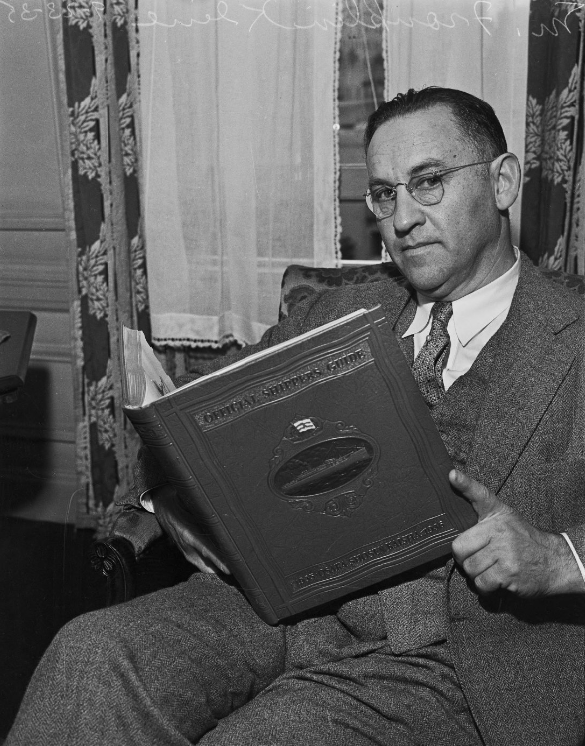
Meier Franklin Kline

“This fellow here” – I show her a photo of Meier F. Kilne, the American writer who built the mansion. “Oh, I can’t remember the name. But it was said that he used to help Jewish children escape before the war, the so called Kindertransport. So the story was that he was involved in that.” This is another interesting revelation about Meier F. Kline, and an aspect of his life I’d never heard about before.

The Fire
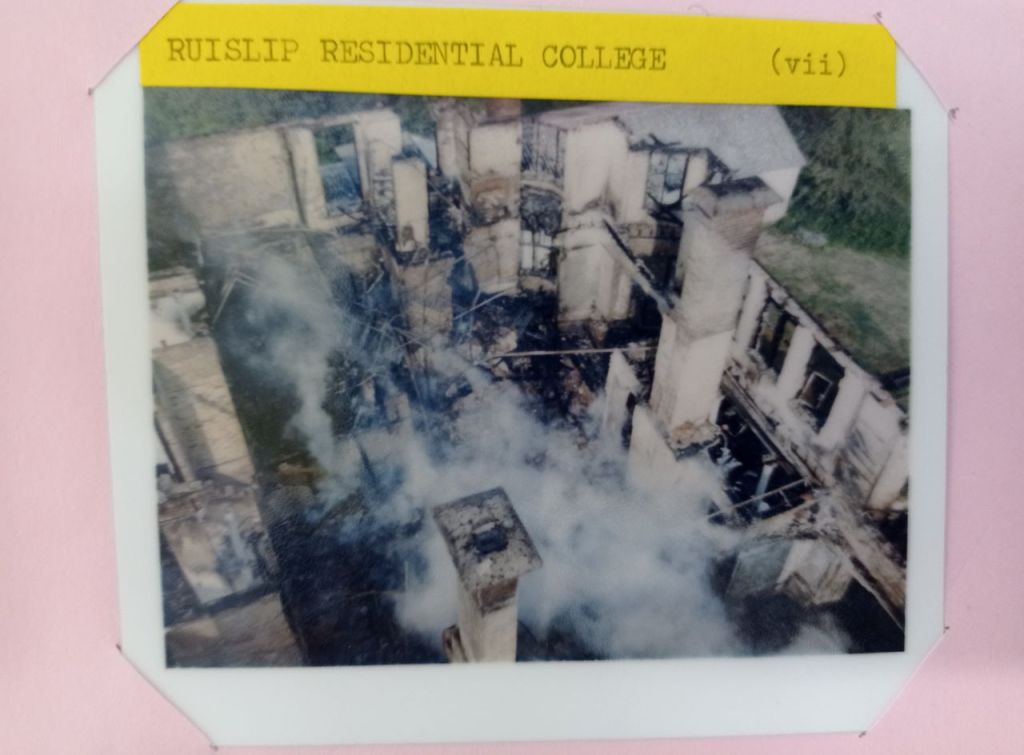
A polaroid attached to the mansion’s Fire Investigation Report

I then ask Barbara about how she remembers the day of the fire that destroyed the mansion in 1984. “It happened in August, and we didn’t have any courses, everybody took their holidays in August. My husband had dies before then, but a friend would take me up to Shropshire, where I come from”. She remembers that as they came back on the end of the holiday and drew up to the cottage opposite the mansion’s driveway, there was a fire engine. you see. “I said – oh my goodness, I hope everything’s alright – and then we heard the fire. There was this panelling on the walls, and it was old. Mr Sale, who was the warden at the time, was out – so there was nobody in there, and I thought it was a passing policeman who saw smoke and called it in”

I explain about how I sourced the fire investigation report at the London Metropolitan Archive, which showed that the fire was a result of vapours from chemicals used to renovate the mansion being ignited by the pilot light of the mansion’s boiler – someone had the unfortunate idea to store those chemicals nearby. Barbara then surprises me with her response.

“It must have been at the cellar”, she says. “This is where the central heating was”

That’s an answer to a very burning question, if I ever had one ! “Was there a cellar?”, I ask. “Yes, there was a cellar, although I never really went down there. The cellar and the attic were places I never found myself in. My position was in kitchen”. At last, a confirmation that indeed a space exists in the mound under the ruin. It’s entrance must have been filled in at some point after the fire, but it’s certainly there.

“And of course there was the annex down the drive, which was a newer building with 20 or so bedrooms in it. And I think at a later time vandals did get in there, and there was drug taking or something like that, so eventually they demolished it as well”. A sad end for the last standing building in the grounds of the Battle of Britain House.

Characters from the mansion’s past

Another case comes to mind : “I have a particular question about a French girl who worked at the house”, I say. Barbara’s response is immediate : “Colette? Of course I remember her. We kept in touch until she actually died… She was very popular and friendly with everybody, and I think she quite enjoyed her time there. Her and her husband came over from France and visited me with Sylvie, their little girl. And she always kept in touch, wrote letters to me.”

Colette Broche with daughter Sylvie and her brother

I mention how Sylvie had contacted me in the past, sharing details of daily life and important documents found in her mother’s diary in relation to her time at the Battle of Britain House. This included a signed recipe book presented to her by the mansion’s staff, including the dedications from Barbara and her husband :
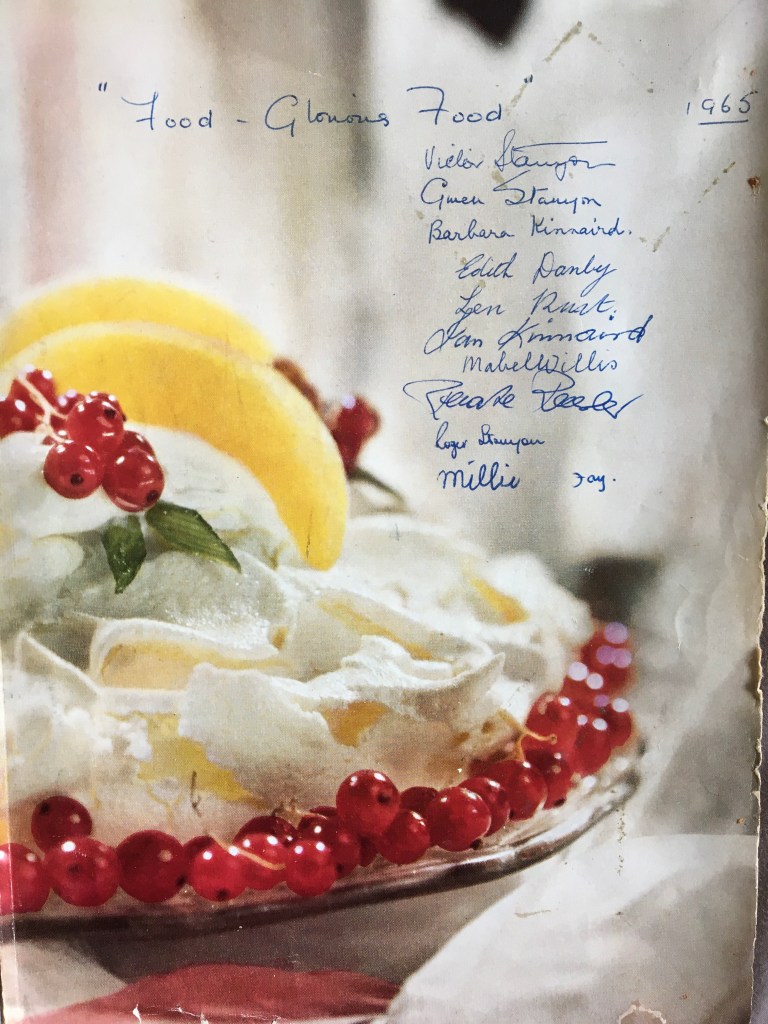
Barbara’s (3rd from the top) & Ian’s (6th from the top) dedication on Colette’s gift recipe book

Barbara is very pleased to hear Colette particularly praised the quality and variety of food prepared at the Battle of Britain House. The conversation the turns to the wartime history of the house. “Do you remember anything being said?” I ask. “Not much”, she admits. “That was way before my time at the house. There was just one occasion, I can’t remember what course it was, but we had a lady who came on a course and she said – oh, I recognize this house. She had been one of the people that they dropped over into France, like spies, or whatever they called them, the Resistance. But she’d been at the house, and they did training in the woods, and she recognized it, although she never actually knew where it was, it was all secret. But she recognized the place”. Another notable recollection from Barbara, which indicates that the mansion has also been used to train French Maquis for missions into France – very likely the 1944 Jedburgh missions, involving SOE/OSS personnel and French Resistance fighters operating in teams of 3.

A Jedburgh team preparing to paradrop into France, possibly from Harrington Airfield, England 1944

The daily routine

The conversation now turns to the daily routine at the house. “I started at half past 7 in the morning to get the breakfast ready. Then the students came over for breakfast and they started lectures at 9 o’clock. Then I was preparing the lunch, of course, with help in the kitchen – they had that at 1 o’clock. They had afternoon tea, I used to make cakes with tea. And then they had the evening meal – although I’d finished work around half past 2, I went back across the road to the cottage, I came back again to work at 5 o’clock, to get ready for the evening meal, and finished about half past 8, then went back home again”
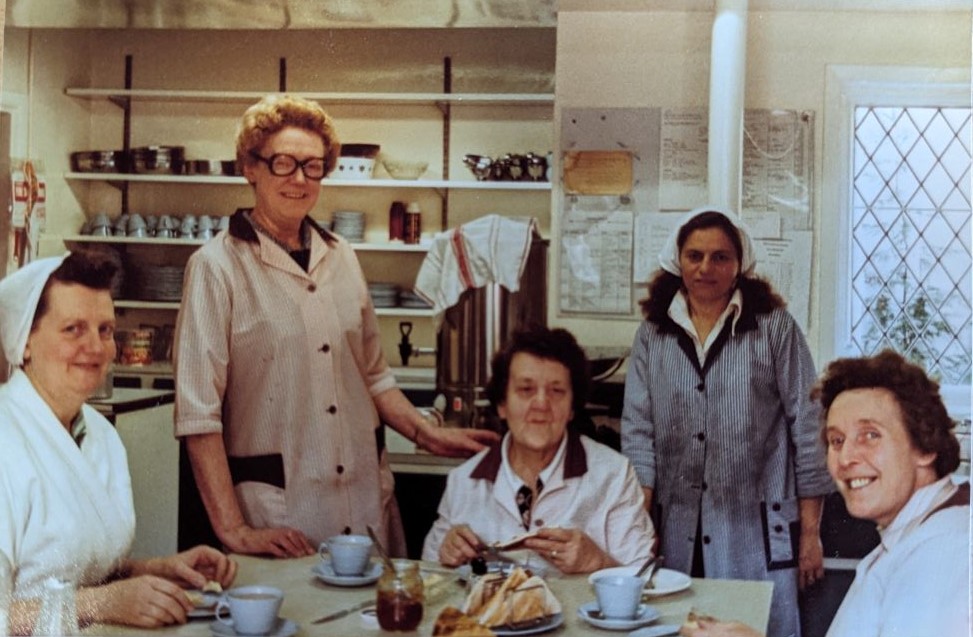
The mansion’s kitchen in the 1970s. Barbara is on the left.

Barbara laughs “It was very busy !! Sometimes we had a course Monday to Friday, they went home after tea on Friday, and another course came in Friday evening for the weekend. And then I had a day off in the week when they had to take a spare cook from somewhere to take my place, otherwise I was off on Saturday and Sunday if there was no course. So it was very busy”. I ask whether the au-pairs helped in the kitchen “Oh yes. We had Colette, we had another French girl called Helene, we had a Spanish girl – Consuelo. There was the Portuguese girls, Marie-Louise, and another girl called Fatima, a Norwegian – Noreen, a Finnish girl – Haike I think she was. Yes, we had the United Nations !! she laughs. “Some of them could speak very good English, and some others, well.. I remember a Spanish girl, and Mrs Stanyon showing her around saying – and this here is A brown tree ! They tried to carry things on, but some times it was very difficult. I think it was through an agency they found the foreign girls, and then we had various local people like Millie who helped, either cleaning bedrooms or turning in the dining room and things like that”
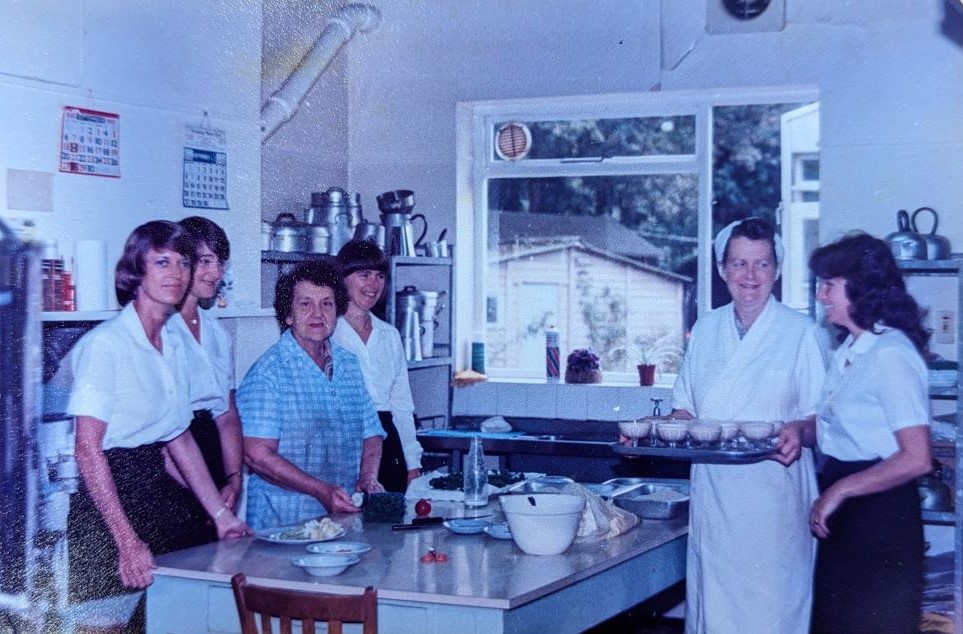
Another kitchen scene from Barbara’s collection (2nd from right)

Barbara is now showing me more photos from her time at the house, some of which I’ve never seen before :
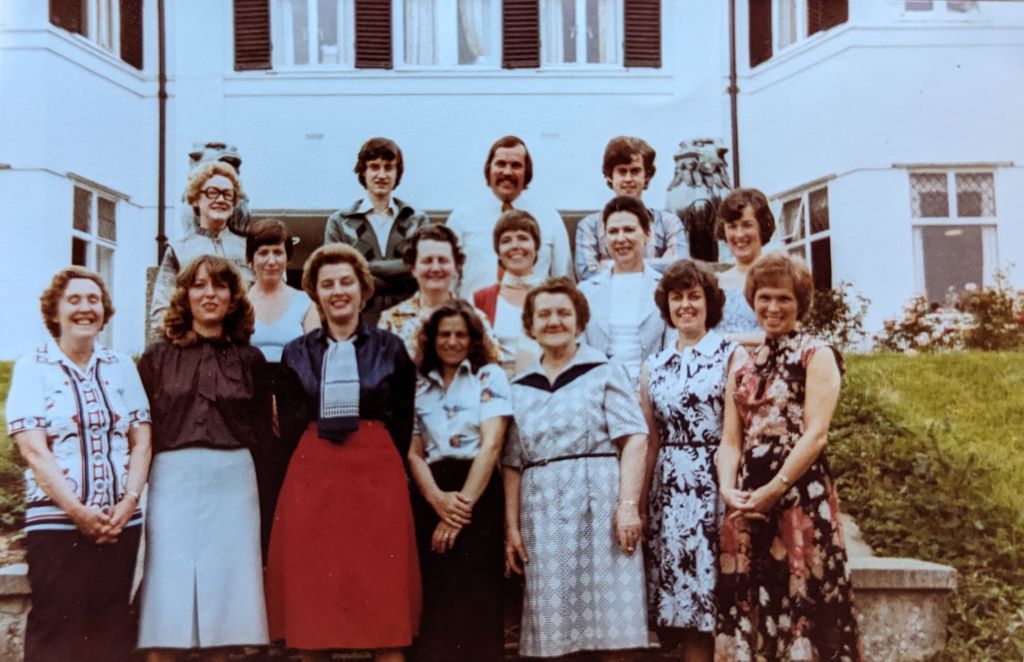
Staff at the Battle of Britain House in the 80s

“This is the staff at the house around the time we had the fire. This is at the back of the house looking down towards the Lido”.
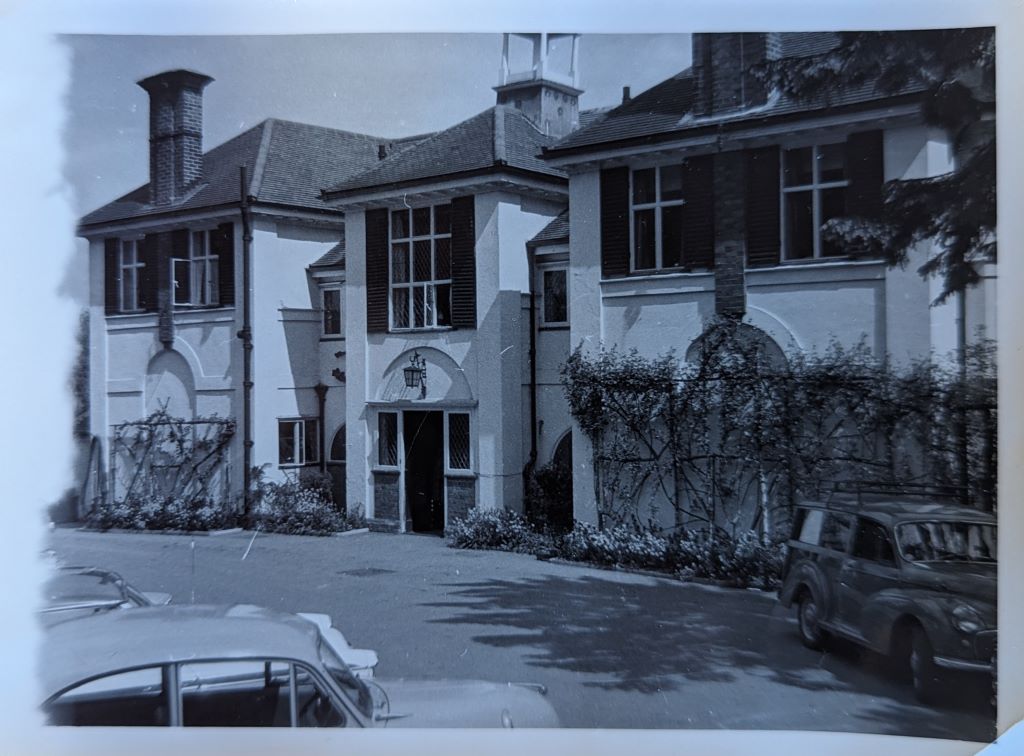
A photo of the main entrance from Barbara’s collection

Barbara reminisces about the courses programme at the house “We had painting for pleasure, youth leadership training, and Laings the builders who had a lot of courses for their former employees – those who had gone into retirement. We had a folk group called The Spinners who came in over the weekends, and Claire Rayner – she lived in Watford I think – who used to be an agony aunt, as they call them, she came in too. I remember she came in one evening, and Mr Dalton who was one of the wardens said she had turned up like a ship in full sail, black sails too – for she was a large woman, and had that big black dress on !! We had Sir Adrian Boult, he did various courses on music. And we had the Rotary Club who held meetings there, and we had courses on nature – like the Natural History Society visiting. And we had one particular course who would get up at around 3 o’clock in the morning and go in the woods to hear the dawn chorus… oh I wish now I’d kept a list of all the various courses we had ! But had quite a variety of interesting things going on”.

Exotic Animals

My next question is about the cast metal statues which adorned the grounds, brought in the house by Franklin Meier Kline.
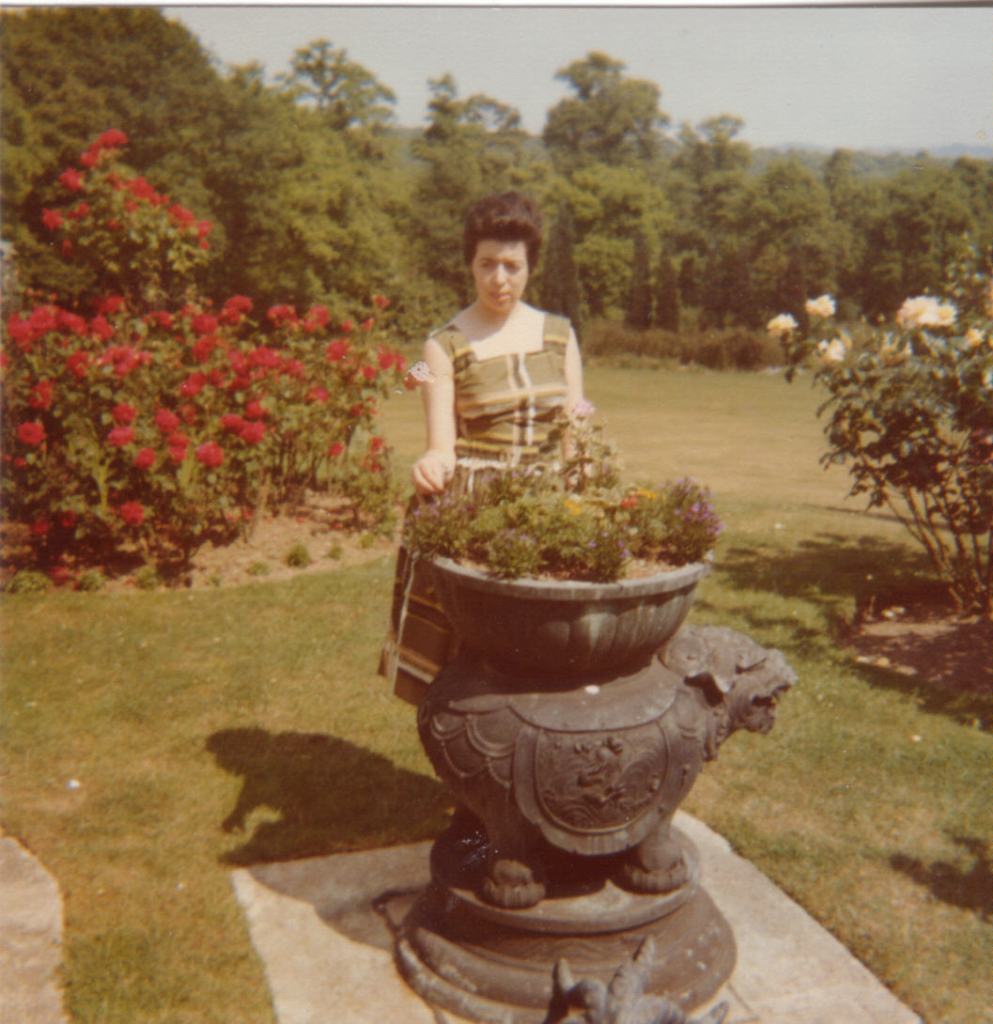
Maria Louisa next to one of FM Kline’s now lost cast metal planter

“Do you remember the lions and the elephant planters?” I ask. “Oh yes, yes I do remember. There was one lion on either side of the steps. I did hear that they’ve been stolen some time ago.. I don’t know if that’s true, but they’re not there anymore.”

Caesar

“But that looks like Caesar, the old dog. When I first went to work there, we did occasionally have a health inspector who came around, and we had two dogs, Caesar and Timmy, and two cats – and the cats used to sleep in the kitchen by the boiler that heated the water. You wouldn’t be allowed to do that today, different health and safety standards! ”

Closing

I show Barbara some photos from the day of the fire, and recent photos of the ruin. I ask her whether she has visited the site since

“Oh no.. its so sad. I haven’t been around there since it burned down. Can’t imagine it like that now. I used to go around from Poor’s Field and the Lido to see the blue bells in spring, but haven’t been at the site, and I don’t visit the woods anymore”, she smiles. “It all seems so long ago… when we first came there, there were no street lights up Ducks Hill road, no pavement – there was just a hedge bank. Well there wasn’t so much traffic, but you just got out in the way, and hoped that no traffic was going by. No bus down that way, we had to go down to the bottom to get a bus. We lived in number 2 at the cottages opposite, and in number 1 there was an elderly couple (at that time) who seemed to know Kline, the man who built Franklin House. They came from Sheffield originally, and the man used to work at St. Bernard’s Hospital in Southall, and I think she also did at one time. They used to know a lot about the old history of the house and the area, from when they used to take things around in a horse and cart ! I haven’t been to the woods for years, but there used to be a scout camp in the woods. At one time in the evening, from our cottage, we could see the scouts with their torches, singing, going through the woods at night !!”
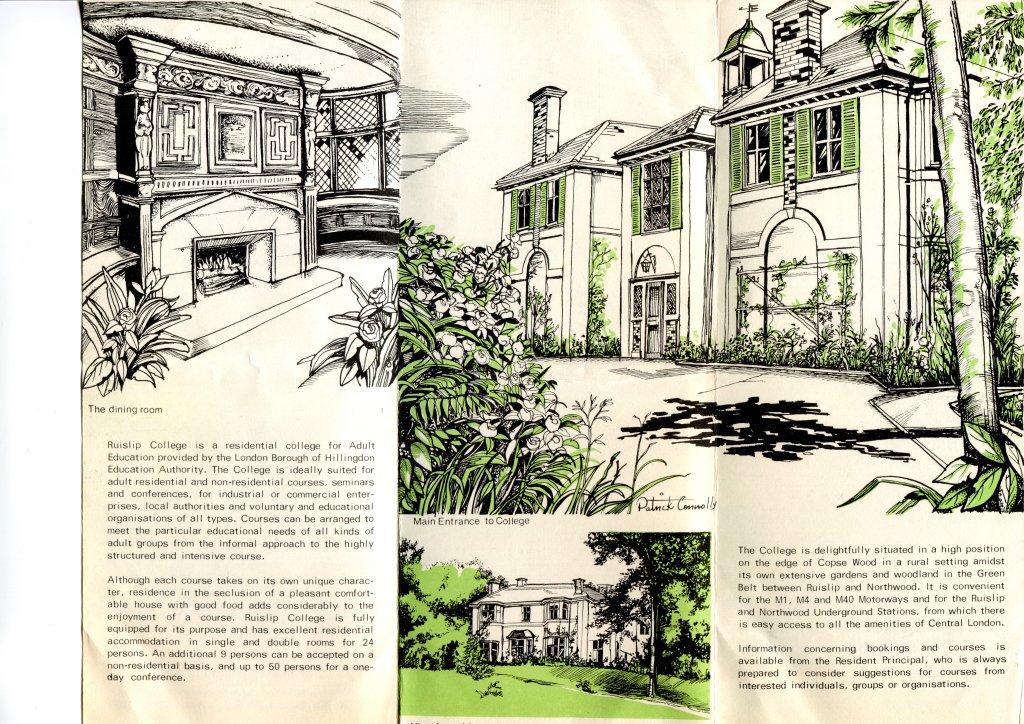
The wood-panelled fireplace appears in a contemporary flyer

Last, I ask Barbara to walk me through the house as it was back then. “Well you went in the front door, and there was a big hall with a fireplace. To the right there was a library, then there was what they called the lecture room. The dining room was near the hall, then the kitchen, and then you went down along a corridor – I remember there were 2 or 3 big fridges there – and at the end, there was the sewing room, we had a lady who did the sewing and all that. Then the stairs went up and round, you could see the top, and there was a bedroom at the front for the warden and his wife, then there was a small bedroom with one bed, and another one with 4 beds in it, then another small bedroom – and a lounge and kitchenette for the warden and his wife upstairs. And round the other way there were two rooms for the au-pairs, who had a room each in those. I’m sure there was an attic, but I never went up there – or to the cellar !” She reiterates, laughing.

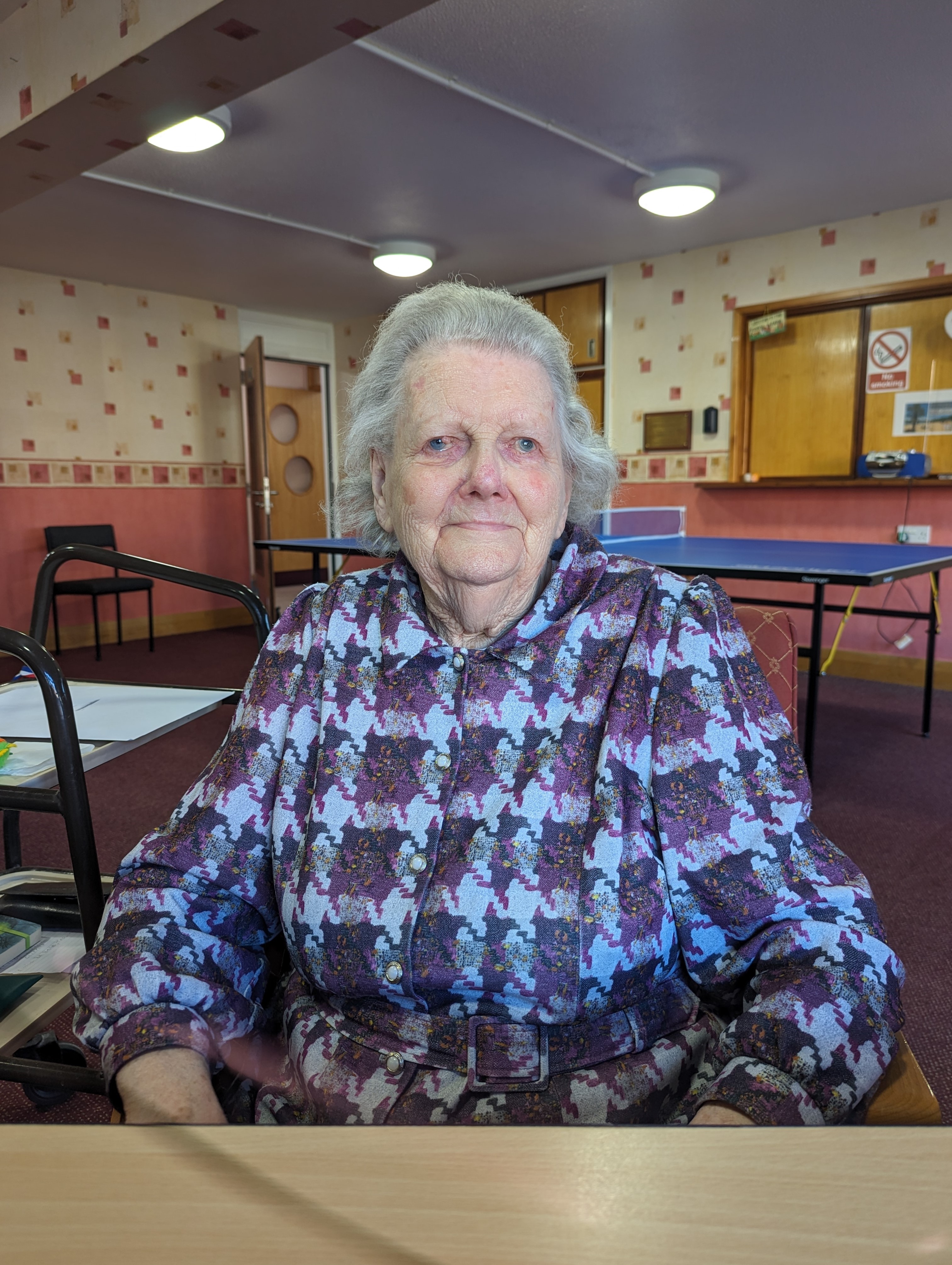
Barbara Kinnaird, then and now

At 98, Barbara Kinnaird is well and sound, has a great sense of humour, and still does her own shopping at Ruislip High Street – make sure you say hi if you meet her ! Dear Barbara, my heartfelt thanks for offering your time, memories and photos. I’m wishing you well, until we meet again to share more forgotten stories of the Battle of Britain House.

Flight of the Invader

How an air crash investigation in Germany uncovered the story of one of the most secret spy operations of World War 2

A mysterious crash

In the small hours of the 20th of March 1945, Olinde Kruse woke up from the sound of a loud crash. Startled by the sudden bang, she sat up in her bed, listening on, holding her breath – but nothing further could be heard in the quiet of night. Her husband, Bauer, was still in deep sleep beside her, exhausted after a hard day’s labour in the fields. He didn’t seem to have noticed the loud noise at all. Hermann, their 6 year old son was still asleep in his bed across the room too. Olinde was very tired herself after a long day tending to the farm, and thinking it must have been the last thunderclap of the storm passing over the Schwege moors, she promptly went back to sleep.

An air photograph of the Hunteburg farmland (approx bottom right) and the south coast of lake Dümmer (top left) © Bundesarchiv

The farmstead outside Hunteburg (a small town near Osnabrück in Lower Saxony), belonged to the Kruse family for generations. It meant hard work every day, but especially in recent years, ever since all the young men who used to work for them had been called up for military service. The state had sent replacements in the form of able Russian and Ukrainian prisoners of war, who now helped working the fields and tending to the animals. They didn’t speak much German, but they were capable farmers.

Ukrainian Ostarbeiter (Workers from the East) © Bundesarchiv

The following morning, Olinde discussed the curious incident with everyone at the farm. Some workers had been startled by last night’s noise too, raising further suspicions about the nature of the loud crash. In the afternoon, after the day’s tasks had been completed, Olinde, young Hermann and a Russian hand set off through the fields, heading towards what she thought was the general direction of the bang she’d heard the night before.

As they approached the lakeside of Dümmer See, they arrived at a scene of carnage : before their eyes, there was the mangled metal hulk of an unmarked black aircraft, part-buried in the marshland – and on the left side of the wreckage, lay the dead body of an airman, badly wounded in the left leg. The body of another airman could be seen in the meadow about 50 metres away. A third airman could be seen in the water, a bit further away, while a fourth member of the crew was eventually discovered at a distance of about 100m from the crash. They were all bearing US insignia.

Wreckage of a Douglas A26 Invader (not the one mentioned in this article)

On the right side of the wreckage, the Kruse family made an unexpected discovery : the body of a man dressed in civilian clothes, bearing a fatal wound on the side of his head. The papers found on the body identified him as Pawel Nowak, a Czech citizen. He carried documents from the Hermann-Göring works in Prague, recommending him for work in a factory near Mülheim in the Ruhr Valley, Germany’s industrial heartland.

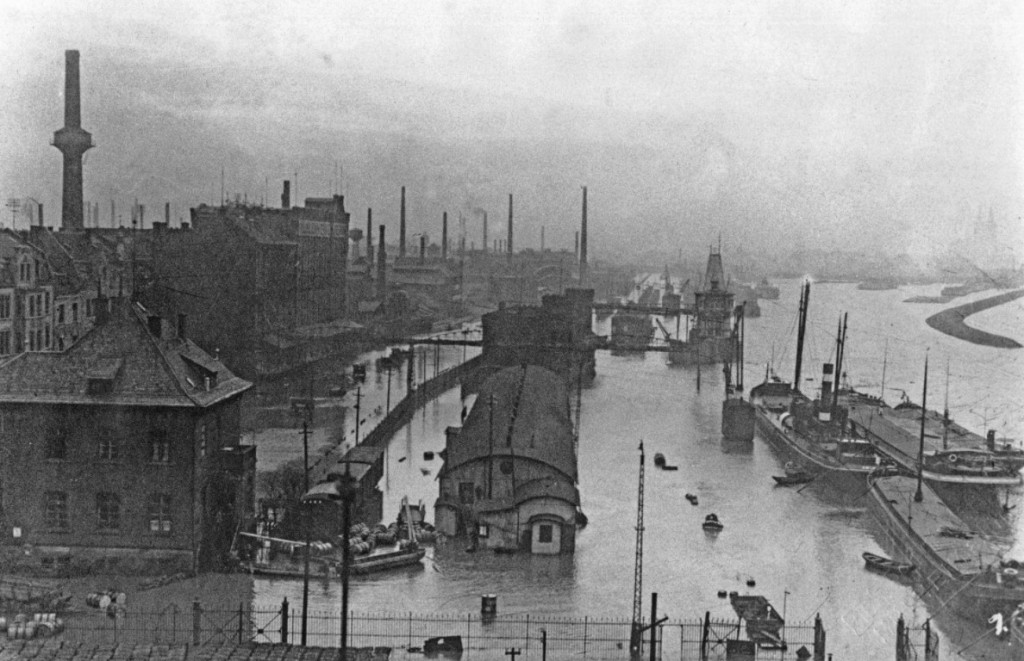
The Ruhr at Mülheim © muelheimerhafen.com

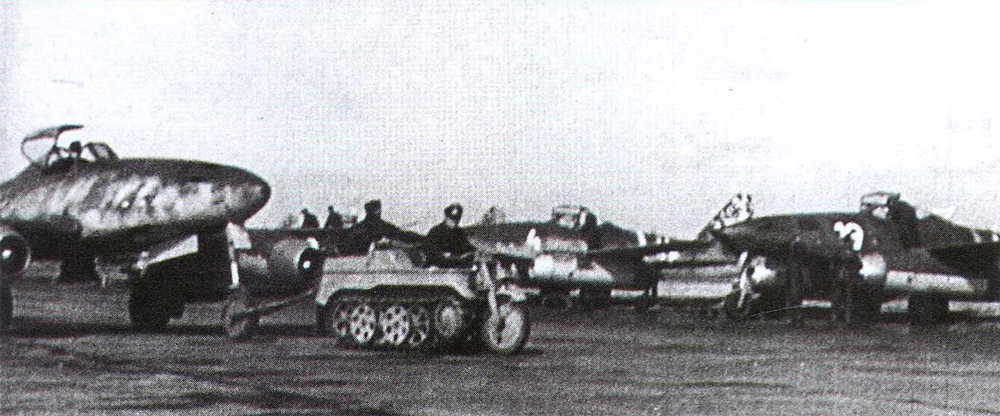
The family alerted the Gendarmerie at Bramsche, about 30km away, who promptly reported the incident to the airbase at nearby Achmer. Wonder Weapon aircraft like Me262 and Ar234 operated there in the final stages of the war, and the skies over the marshland frequently buzzed with the unfamiliar sound of jet engines.

A Me 262A1a Schwalbe jet from JG7 Green 3, towed to position by a Kettenkrad in Achmer airfield – January 1944 © Asisbiz.com

Before long, a Luftwaffe rescue contingent led by officer Ernst Grussendorf arrived at the scene, removed the bodies, and confiscated documents and other evidence from the crash site. With the help of Luftwaffe’s British and American Aircraft Identification Manual, the wreckage was identified as a US aircraft, initially thought to be a Douglas Boston. The offices posted a number of Hunteburg’s Volkssturm – the local militia – to guard the crash site overnight. A few days later, they brought in heavy lifters and removed the wreckage to the airbase for inspection.

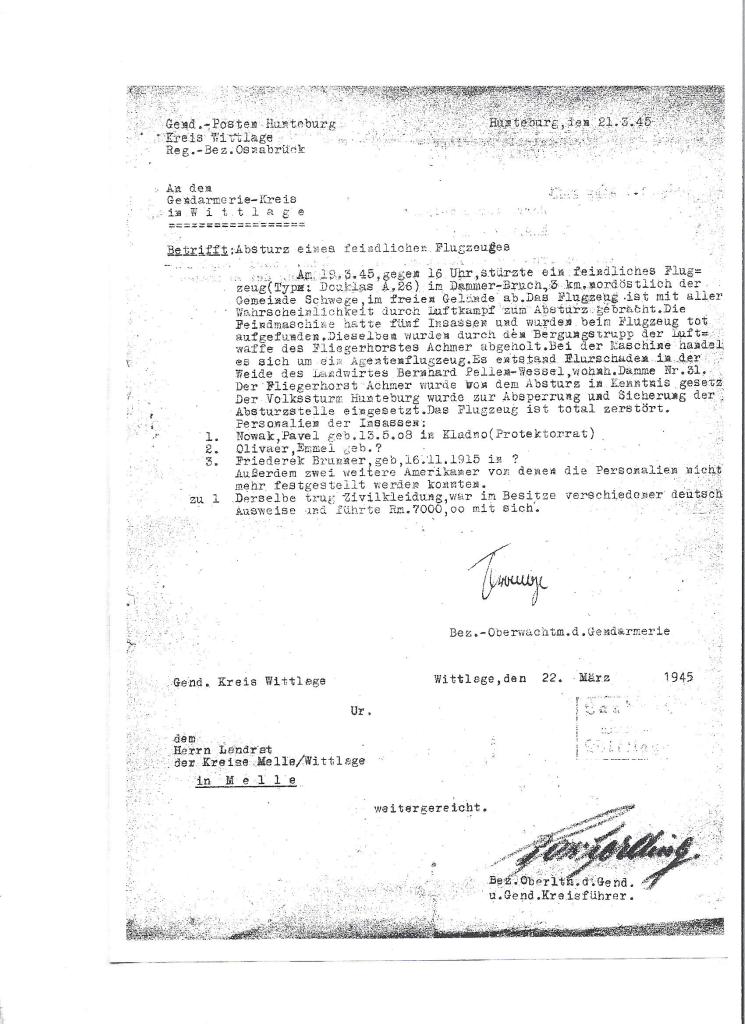
A copy of the original Gendarmerie report of the incident.

By the end of the investigation, authorities had realized that this was a indeed a more advanced aircraft type – a Douglas A-26 Invader. The bodies of the deceased airmen were interred with full military honours at the prisoners of war cemetery close to Achmer airfield – and alongside them, the body of the civilian Pawel Nowak. For the next 70 years, the nature and circumstances of the crash remained a mystery, and so did the unexplained find of a Czech factory worker among the crew of the crashed US aircraft.

A transcript of Olinde Kruse’s statement

It’s a cold winter day in February 2015, and Gertrud Premke had been knocking on doors and accosting people on the streets of Hunteburg all morning. The freelance journalist, reporting on behalf of local media group Wittlager Kreisblatt, was an avid researcher of local aviation history. She had been following up on a cold case from WW2, the rumour of an American airplane crash in the marshland near lake Dümmer. The crash itself wasn’t unusual : the lake was a substantial body of water, and flyers frequently used it as a visual navigation point. Allied bombers flying in from Britain especially favoured it : once they trespassed into occupied Europe through the reasonably flak-free Zuider Zee corridor in the Netherlands, they would turn east by southeast at Dummer Lake. It was a manoeuvre that lined them up with targets at Hannover, Braunschweig, and Magdenburg, before reaching Berlin. As a result, several aircraft, both Allied and German, were known to have crashed in the region around lake Dummer, whether by flak, weather or accident. For her investigation, Premke had teamed up with the one person who was familiar with every single one of those incidents : Martin Frauenheim, a local aviator and aviation historian, who was also a known air crash investigation authority in the region.

Lake Dümmer in Lower Saxony, with Hunteburg farmland (approx. top right)

Frauenheim reveals : “I was born in 1947, and been married for more than 50 years. I have with two adult children and four adult grandchildren. I studied Mechanical Engineering, and worked at a machine factory for railway signaling technology – but it was aviation that fascinated me since I was a child. I have been a member of the Osnabrück-Atterheide Aeroclub since 1972, and have spent the last 60 years building a collection on Osnabrück’s aviation history, in particular the story of local rocket pioneer Reinhold Tiling. My many years of voluntary work as mayor of our municipality of Hagen am Teutoburg Forest, resulted in many local contacts, from whom I have learned a great deal about the region’s Second World War history. Through the years, I have also been involved in aviation archaeology. In addition to the numerous plane crashes recorded near our local community, crashes in the greater region have also been extensively researched and documented.

Dr Martin Frauenheim (right) with attendees at an air crash investigation lecture

I became somewhat known locally for my involvement in air crash investigation & research. So some years ago, I received a tip about a WW2 plane crash in the region – one that involved a secret agent. All experts following up that rumour up to that time considered it unsubstantiated, a cold case. But this very fact stoked my own curiosity further ! It took about a decade of meticulous research before all the facts finally surfaced. ”

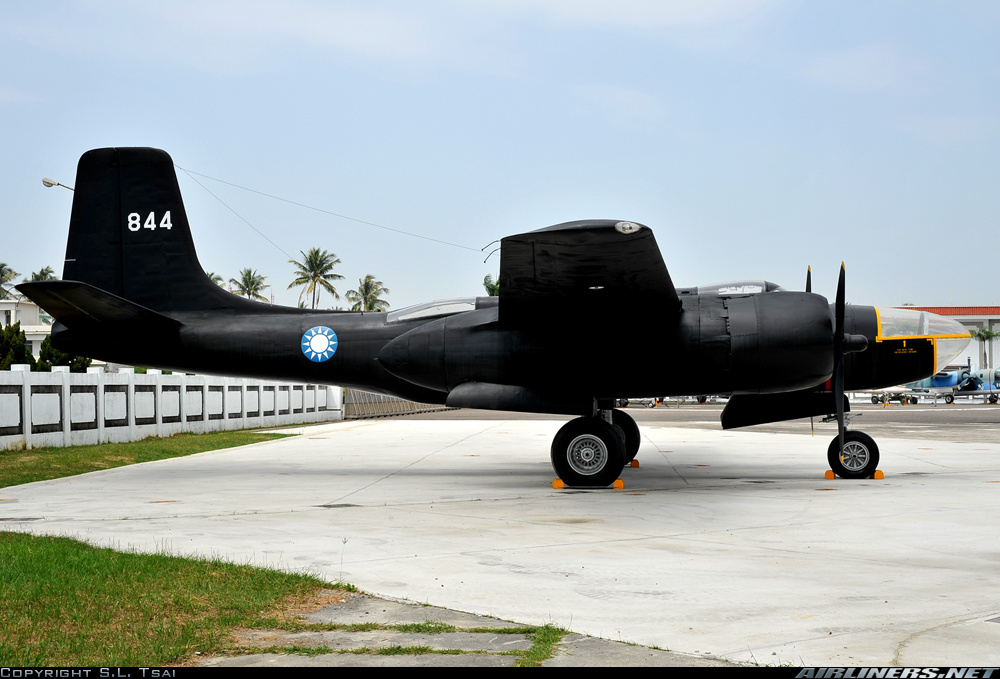
After teaming up with Premke to look into the case and cross reference newly declassified documents, Frauenheim came to realise that this particular crash was different. US Air Force documents from the 25th Bomb Group (Reconnaisance) recorded the lost aircraft after it failed to return from its flight. But previously unknown facts about the true nature of the activities of 25th BG had began emerging around 2010 : specifically the use of its aircraft to insert secret agents into occupied Europe, and then harvest the intelligence they transmitted via radio. Both of these missions required stealth, and so the groups “special” squadrons were equipped with the latest, fastest light bomber aircraft available to the Allies at the time : DeHavilland Mosquitos and A-26 Invaders. Painted pitch black, and bearing no insignia, the aircraft could fly deep into enemy territory at night in relative secrecy.

An A26 Invader painted in a matt black scheme. The aircraft that crashed near Dummer Lake had no insignia

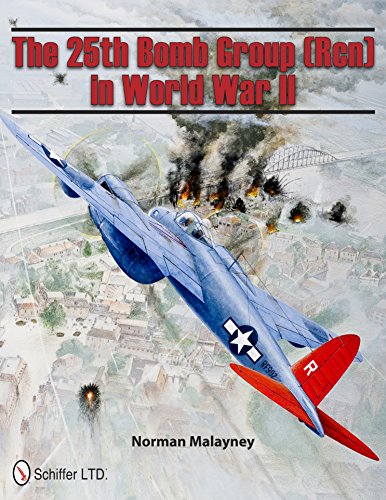
Frauenheim recalls : “..the hitherto completely unexplained nature of the crash was the incentive for a detailed investigation. At first there very few clues to follow up. But then came the publication of a book – “The 25th Bomb Group (Rcn) in World War II” by Norman Malayney An aviation friend had given me a copy, and in it, I found the first references about the lost Invader mission in March 1945. Eventually I got in touch with Norman Malayney, who has kindly corresponded with a wealth of information and material on those secret missions over Germany. I am grateful to Malayney for his valuable insight – finally, some well-founded clues and hypotheses about what might have taken place that night began to emerge.”

Norman Malayney’s book and subsequent publication was a turning point in the research

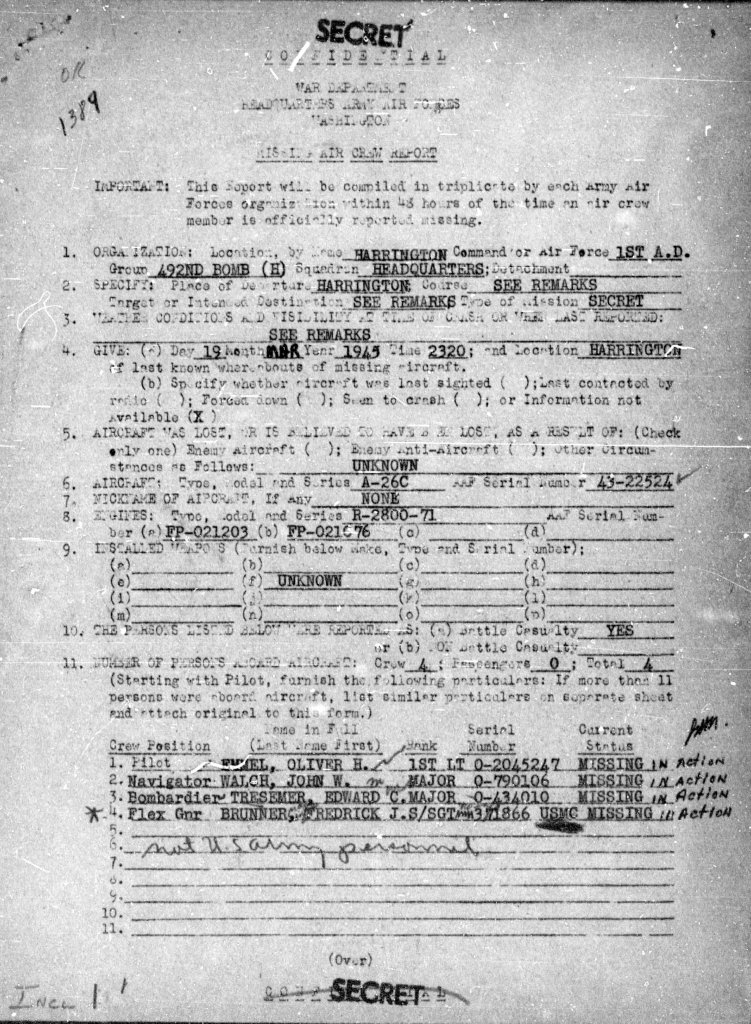
The declassified manifest of the Douglas A-26 Invader as well as the missing aircraft report specified 4 crew members unaccounted for – 3 airmen and a US Marine Corps Sergeant. However, those didn’t match the German incident and eyewitness records. Those records mentioned confirmed that a 5th body had been recovered from the crash, identified as a Czech civilian, Pawel Novak. So what was the answer to that mystery ? What really happened that night ? The researchers knew that in order to answer this, they first had to locate the crash site. And sometimes, it seems, all you got to do is ask.

The declassified Missing Air Crew Report. Note how the 5th person in the airplane is not reported at all

That was the reason Premke turned up at the village that February morning in 2015, asking around local stores, businesses and passers-by about whether they had any memory or information about the airplane crash that happened near the lake in March 1945. She knew from existing archival records – Olinde Kruse’s and Ernst Grussendorf’s official testimonies – that the plane had been found near the Kruse farm, and after inquiring with a number of locals, she was directed there. As Premke reached the farm, she saw an elderly man driving a tractor, and waved him down. The elderly man’s eyes lit when Gertrud Premke revealed the nature of her visit : the 76 year old was no other than Hermann Kruse, the little boy who, alongside his mother, had witnessed the aftermath of the crash in March 1945. Kruse still lived and worked his family’s land 70 years later, and the horrific memory of what he witnessed as a 6 year old child was still very much with him. He promptly led the researchers to the brook where he remembered seeing the wreckage all those years ago.

Hermann Kruse in 2015

The dig

Frauenheim, Premke and a group of volunteers began scouring the exact spot pointed out by Kruse. Soon, the scanners began picking up metal signatures in the wider area next to the brook.

Martin Frauenheim (left) with Julia Schlöpker Os1. TV / Osnabrück Television (middle) and an unknown photographer (right) at the site of the crash

This was, beyond doubt, the missing A26 Invader that crashed in the marshes on that fateful night in March 1945. But what could have been the cause the crash? Frauenheim had already been developing a well rounded theory about what might have happened :

One of A-26’s engine RPM indicator found at the crash site

“After a lengthy search for the crash site, we finally found the exact location of the event, thanks to information provided by two surviving eyewitnesses. Although the crash site was cleared at the time, everything that penetrated the ground due to the force of the impact could still be found today by scanning and probing. The subsequent dig at the site brought extensive material to light, which enabled us to make an exact match of the aircraft involved. The discovery of the nameplate of the machine at the crash site was the highlight of the dig, and a real stroke of luck. The crash site investigation was spread over several weeks and even across seasons, due to the realities of the site being used as arable farmland. Our search could only take place after the harvest, but it resulted in the discovery of countless small aircraft parts, which I itemized and photographed meticulously prior to assigning those to the schematics and structure of the aircraft. With time, we were able to determine even specific flight instruments from the fragments found at the site.

A major find : the A26 Invader’s factory plate (as found) specified the model and serial number of the aircraft

It was hinted somewhere that the aircraft might have been unarmed. However, we found hard core 12.7 mm rounds, which could only have come from this aircraft. A contemporary witness confirmed that the entire wreckage was painted glossy black on the outside, without insignia of sovereignty. He also described how the tail rudder was made of fabric, just like the elevators, rather than aluminium – an important identifying detail. We also found a small sealed glass tube. Could it have been some form of soluble drug? I suspect that amphetamines could have been used by aircrews to keep them sharp during longer night missions. Further analysis would be required to confirm this assumption.

Alternative flight aids?

(Back then as it is today) ..every aircraft was routinely subjected to a safety check after it has been flown and used between 50 and 100 hours, and particularly crucial parts are immediately replaced when found to be defective. It was probably the same with this Invader. The aircraft should have been thoroughly checked before the mission, including the possible replacement of both engines – which could have been shot up by flak during its previous mission. But due to a confusion over its final orders on the day of the flight, there was a great deal of hectic activity, which suggests that the technical checks were carried out hastily. A test flight usually follows a technical check-up, but in this case, none of those seem to have been carried out thoroughly enough, or even at all. In addition, the crew was inexperienced, and had never flown missions together before. The pilot himself didn’t have much flight time at the cockpit of an Invader. Last, it is surprising that this flight was in our area despite the adverse weather forecast. So, hypothetically, many of the the failures that led to the crash could have been avoided.

Schematics from the aircraft’s original 1944 handbook had to be sourced and consulted to match the various part finds

The operation would have involved low-level flight at night, indicated by the matt black paintwork for camouflage. The low level flight is assumed because German anti-aircraft guns wouldn’t be able to depress their barrels enough to shoot in such a steep trajectory. But low level night flights pose particular challenges too. Eye witnesses reported that the wreckage didn’t appear to have exploded on impact, and it didn’t look burnt out either. However, we did find charred engine parts at the site. My guess is that there might have been an engine fire prior to the crash, forcing the pilot to shut down the engine and trim the aircraft for single-engine flight. But it is likely that the aircraft was flying too low to cope with the loss of one of the engines. It possibly got into an incline, and its wing caught the ground at full speed, cartwheeling sideways with the terrible consequences witnessed at the crash site. Had the aircraft been flying much higher, they could have used the parachutes (they had already been wearing) to survive..”

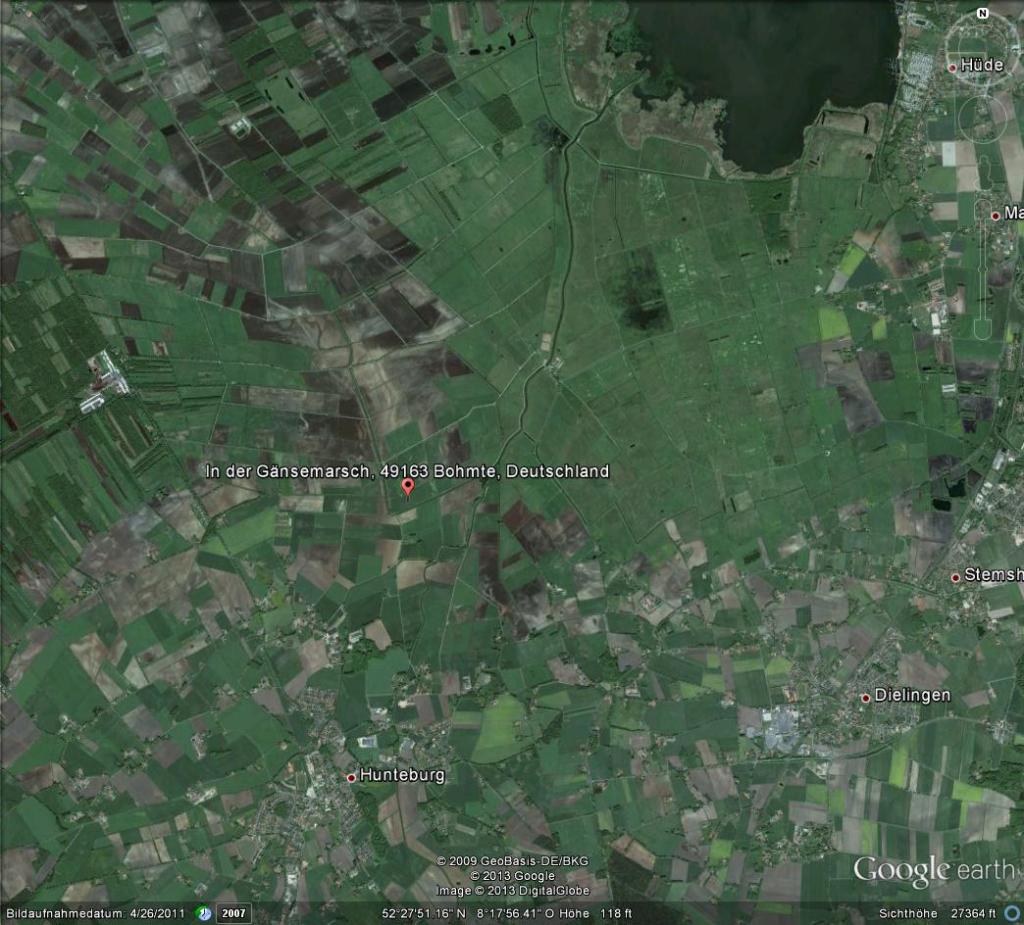
Crash site at the Kruse farm between Hunteburg and Lake Dümmer © Google Earth

Later revelations would affirm Frauenheim’s hypothesis to a great degree. But the mystery of the identity of the Czech civilian was soon to be revealed too. And none of this could have ever been possible if it wasn’t for more recent developments in the declassification of OSS documents pertaining to the agency’s wartime activities.

Glimmers of Light

Around 1980, the CIA transferred all Office of Strategic Services (OSS) files held in their vaults since wartime to the National Archives & Records Administration (NARA), with a view to begin the process of their declassification under the provisions of the Freedom of Information Act. The records contained detailed information on every clandestine operation performed by the OSS during WW2, including the names of the agents and personnel involved. Slowly at first, the nature and scope of OSS secret effort to penetrate the 3rd Reich was gradually being revealed.

Declassified OSS records can be accessed in various NARA locations, such as the archives held at College Park, Maryland, pictured here. Photo by Jarek Tuszyński / CC-BY-SA-3.0 & GDFL

In 2002, a New York lawyer named Jonathan Gould began publicizing the memoir of his father, former OSS Labour Division Leutenant Joseph Gould. The story he revealed was rather incredible : it appeared that in the final stages of the war, the OSS, under pressure to provide credible intelligence ahead of the Allied advance beyond the Rhine, had sought to train exiled German Communists for the task. The so called TOOL Missions were a fact : Lt Joseph Gould himself was the man who sought, recruited, trained, and then successfully launched those men into Germany. For his service, the OSS recommended him for the Bronze Star in summer 1945. By October that year, however, the OSS had ceased to exist, and was replaced by the CIA. With the Red Scare, McCarthyism and Cold War mistrust on the rise, intelligence work was fast adapting to a new post- war environment. At some point, someone high up in the hierarchy decided that the inconvenient details of this unholy wartime alliance with Communists should rather remain secret. So the commendation was never pursued, and Lt Gould had still not received the Bronze Star Medal at the time of his death in 1993. This injustice prompted his son, Jonathan, to make his story known, and petition for a posthumous award. After a long campaign, during which Jonathan uncovered a trove of formerly classified OSS documents about the TOOL missions (not least the original 1945 medal commendation for his father !) the well-deserved Bronze Star was finally awarded by New York Congressman Charles Rangel.

Jonathan’s efforts, however, had begun revealing much more than the story of his father. Through the archival research of declassified documents and interviews with survivors and their relatives, the stories of the men who took part in those top secret clandestine missions began taking shape, in glorious detail. As early as 2002, Jonathan published a clue about one of those men, Kurt Gruber “..killed when the US Air Force plane carrying him to his destination in the Ruhr Valley crashed in bad weather on 19 March 1945”

Lt Joseph Gould’s declassified report of the chaotic events of the eve of the flight

Martin Frauenheim recalls “The name Kurt Gruber and the “Free Germans” were completely unknown to me for a very long time. For many years I only had the aircraft’s declassified casualty report, as well as the police incident report, initially sourced by Dutch researcher Jan Hey, an expert in the field. Even him, however, could not provide further details before he sadly passed away a few years back. But I was already becoming familiar with the name of Lt. Joseph Gould, a name that kept turning up in declassified documents about the March 1945 crash. One thing led to the other : eventually I discovered the name and address of his son, Jonathan Gould, as a result of an Internet search. When I asked him about the events surrounding the crash, he immediately got in touch and provided me with further information. He was equally grateful that in this one case we were able to provide a great deal pf accurate information about the location of the crash.”

Joseph Gould, outside his flat on Mount Street in London, December, 1944. Jonathan Gould has written a book about how his father Joseph Gould recruited spies in Nazi Germany during WWII.

The publication of his (Jonathan’s) book brought many more names, dates, facts about operations over Germany at the end of World War II. His extended research revealed a host of other secret agent missions in and around the Osnabrück area, which fortunately went on without incident.

Frauenheim began corresponding with Jonathan Gould in March 2015, shortly after the discovery of the Hunteburg crash site. By that time, Gould had began turning his father’s memoir into a book, and was already in possession of substantial declassified material about the “lost” CHISEL mission. It soon became apparent that Pawel Nowak, the Czech national whose body was unexpectedly found among those lost in the fatal air crash, was the same person as exiled German dissident Kurt Gruber, whom Lt Gould had trained and instructed into an OSS agent at the Franklin Mansion in Ruislip, England between late 1944 and early 1945.

A secret 1947 report linking OSS agent Kurt Gruber with the crash near Hunteburg. The document had remained classified for six decades

Kurt Gruber had been trained to present several identities as part of his agent assignment, and that complicated my research for decades, making it hard to connect the dots. But once we had established his real name, we found the first solid traces of his identity through making contact with his birthplace at Ahlen in North Rhine – Westphalia. Kurt’s brother Karl, who was also a communist, had been murdered in a street fight by Nazi paramilitaries in 1931 under a trivial pretext – for being a protester. His funeral was attended by everyone in his town. Kurt Gruber took his brother’s death as a sign to go into hiding and begin his resistance activity. Their story stirred enduring sympathy within the local community, where he is still remembered to this day.

Article about the street clash and murder of Kurt Gruber’s brother, Karl – Ahlener Zeitung, 26 March 1931

Through my research into Gruber’s life and deeds, I became familiar with the Free Germans and their activities. Defying the Nazi regime at that time was an act of extreme courage. Joining these secret missions voluntarily shows a very clear determination to oppose the Third Reich. It would be desirable if the United States erected a memorial at the crash site. The premise of German communists supporting American clandestine operations is unique, and deserves to be commemorated. That would certainly be a difficult decision for the Americans to make, however there is merit to it since four American crew members also lost their lives.”

Martin Frauenheim (left) and Hermann Kruse (right) at Hunteburg, 2015

Special thanks to Martin Frauenheim for sharing the details of this astonishing story and his detailed research on the Hunteburg Crash. All photos and documents in this blog post, unless otherwise specified, come from his personal archive

Disclaimer : The dramatization of the night of the crash is entirely fictional, loosely based on all available data. The sole intention of this dramatization is to add flavour in the presentation of the events surrounding the crash.

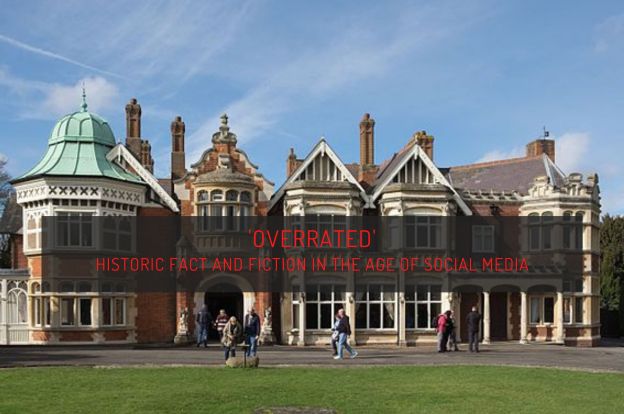
“Overrated” : Historic fact and fiction in the age of social media

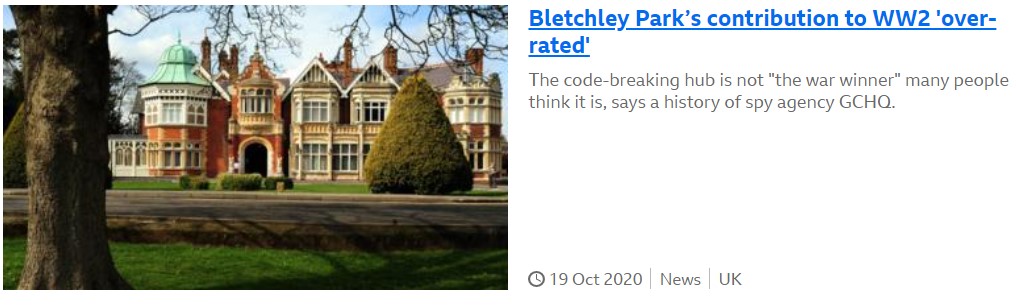
The sensational title of a BBC News article about the role of Bletchley Park’s codebreakers has taken social media by storm. What’s that all about?

The headline ‘Bletchley Park’s contribution to WW2 ‘over-rated’ flashed across my screen earlier today, bringing a large part of my understanding of WW2 down like a house of cards. For all the books I’ve read, the movies I’ve watched, the fabulous TV series, the visits to my beloved Bletchley Park – has the story the Enigma Codebreakers been nothing but an overrated fluke, after all?? ??!!

Beware of clickbait

This is an imaginary reaction, by the way. But it could have been anyone’s reaction to today’s BBC News article . As I write this post, I witness an army of anonymous and eponymous trolls attacking the work of Professor John Ferris, who in his recent book, Behind the Enigma, challenges the established assumption that Bletchley Park’s codebreaking shortened the war by 2 to 4 years :

Overrated. What’s in a word? this is a rather unfortunate, even misleading title from BBC News. To begin with, Ferris was invited by the GCHQ to write the new, authoritative history of Britain’s foremost intelligence agency. He is a well regarded author and historian with the University of Calgary, and was given unparalleled access to GCHQ resources, working closely with them along the way. So what gives?

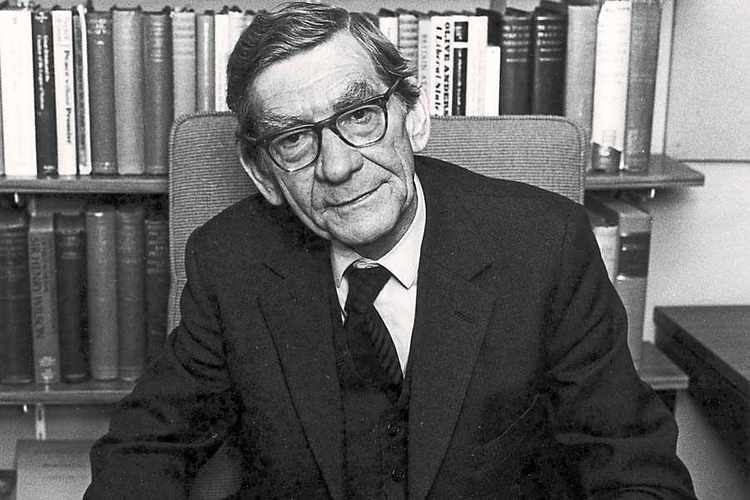
Sir Harry Hinsley OBE

In the heart of the matter lies the origin of the widely popularised conclusion that Ferris challenges : the legend of Bletchley Park’s codebreakers shortening the course of the War by 2 to 4 years comes straight from the mouth of Sir Harry Hinsley, a cryptanalyst who worked at Station X, and author of the previous Official History of British Intelligence. However, Hinsley’s account of the breaking of the Enigma code has come under scrutiny for its lapses & inaccuracies, most notably by Marian Rejewski and Gordon Welchman, two mathematicians and cryptologists that worked with him at Bletchley Park. It appears that it was Hinsley who first proclaimed the “2 to 4 years” conclusion in a 1993 lecture :

Now the question remains how much did it shorten the war, leaving aside the contribution made to the campaigns in the Far East on which the necessary work hasn’t been done yet. My own conclusion is that it shortened the war by not less that two years and probably by four years – that is the war in the Atlantic, the Mediterranean and Europe.

Sir Harry Hinsley (1993, amended in 1996)

Hinsley does go on to explain how he came to that conclusion, albeit with a great deal of what I call authoritative conjecture – the fallacy of authors who despite (or perhaps because of) their immense knowledge on a subject, forget due process, and enter the minefield of careless speculation. In other words, this claim was probably just his personal view, rather than a carefully researched conclusion. Arguably, Hinsley’s wanting performance as the authoritative historian on British Intelligence coupled with the mystique of the branch and sensitive character of the data pertaining to the subject matter, are the factors that gradually led to gross misinterpretations of the intelligence work that took place at Bletchley Park. This includes popular films such as U-571 (2000) in which various Enigma fables are presented to the general public as facts – even prompting a response from Parliament – or Enigma (2001), where Hinsley’s fable is again perpetuated. And the rest is, well, ‘history’

A more rounded opinion on the ‘over-rated’ codebreaking controversy

To put this into perspective, we have to accept that we live in an age of internet-fuelled fallacy, where likes often matter more facts, and where fake news and outlandish conspiracies beset us at every turn. But for those who can see beyond BBC News’ sensational headline (tut tut), will realise that Professor Ferris did what he was actually hired to do : provide us with a meticulously researched, scholarly historic account, which is no less than what Britain’s foremost intelligence agency deserves.

Professor John R. Ferris (©2020 Laura Johnston/Laura Grace Photography)

Those who will read his revision will surely realise that Ferris never set out to diminish GCHQ’s contribution to the war effort – he does, however, set out to establish its true proportion. Isn’t the pursuit of facts, after all, the mantra of every intelligence agency? I have no doubt that John Ferris’ revised history of the GCHQ will be truer to the agency’s core values. And it will also honour the legacy of the Bletchley Park codebreakers, whose degree of accuracy was often the only difference between life or death for the millions of servicemen fighting the war on land, at sea and in the air.

The Enigma memorial at the former RAF Eastcote

(I am writing this article as a mental note to self. Even an amateur history researcher has a moral obligation to support their conclusions with credible sources and evidence and avoid presenting hypotheses as facts)